Warsaw Uprising 1944
On August 1, 1944, at 5 p.m. (the so-called "W" hour), the uprising of the Home Army against the German occupiers broke out in the Polish capital. Suppressed after 63 days of heroic resistance, the Warsaw Uprising is almost an object of worship in Poland. The sometimes extremely emotional discussions that have been going on since 1944 around the decision to instigate the Uprising cannot overshadow the tragedy of the insurgents and - especially - the civilian population of the Polish capital. Who knows if it was not the most harrowing experience of Poles during World War II. In any case, the desire to retaliate against the occupiers after the 1,767 days that elapsed between the German occupation of the city and the day the Uprising broke out is understandable.
No one questions the page of glory written by the insurgents, who fought in solitude for more than two months to liberate the city, while the Red Army had been standing on the right bank of the Vistula River since mid-September, and the Soviet Headquarters even obstructed Allied air support for the insurgents for a long time. Even today, at the same time, the scale of crimes and atrocities committed by the German occupiers during the suppression of the uprising is horrifying.
The outbreak of the Uprising was an excuse for Hitler to order the annihilation of the city. Although within a few days the poorly armed insurgents (up to 40,000 men at its peak) captured most of the city, on August 5 the initiative was seized by the Germans, who from then on systematically pushed the insurgents out of successive neighborhoods.
From the first days, the Germans suppressed the uprising with extreme brutality, directing their fury especially against the civilian population. It is estimated that some 150,000-170,000 Varsovians died at the hands of the Germans, with earlier estimates of as many as 200,000 killed and murdered. Lasting only a few days, the slaughter of Wola (a district of Warsaw), during which the Germans bestially murdered some 50-60 thousand residents in early August 1944, is perhaps the most horrifying part of the Polish capital's tragedy. Atrocities against insurgents and civilians were committed by the Germans during the conquest of successive resisting districts of Warsaw, especially the Old Town (the last defenders of the Old Town went through the sewers to the City Center). The wounded and hospital patients were not spared, and people seeking refuge in churches were murdered.
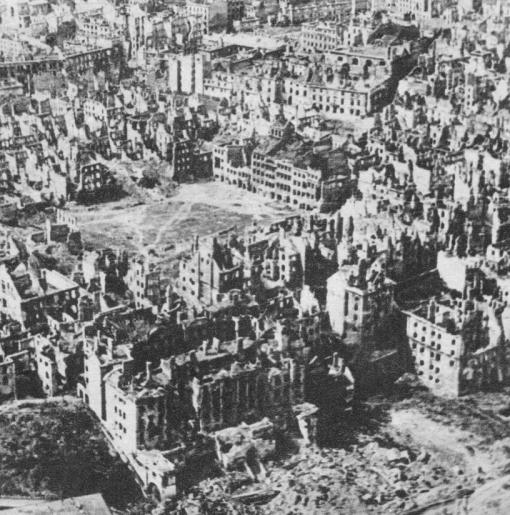
.After the capitulation of the insurgents and the evacuation from the ruined city of the civilian population (about 500,000, of whom 165,000 were sent to forced labor in the Reich and some to concentration camps), special German troops (Sprengkommandos) proceeded to systematically destroy the buildings. This thoroughly irrational action, from the point of view of the war effort, is another example of the ferocity with which the German occupiers engaged in the annihilation of Warsaw. It is estimated that the city's buildings were destroyed by about 80 percent, with the historic buildings destroyed by 90 percent. Polish culture irrevocably lost many works of art, some archives, and book collections.
It is difficult not to agree with President Lech Kaczynski, who wrote in a letter to participants of an academic conference in 2007 that all this makes the Warsaw Uprising "the most painful and most difficult element of history, which is constantly present in the reflection on Polish-German relations in the 20th century."
.The Warsaw Uprising, however, is still poorly known in Germany, despite the fact that it was German historian Hanns von Krannhals (incidentally, a former member of the NSDAP and an anti-Polish propagandist during the war) who published a thorough synthesis of the military aspects of the Warsaw Uprising in Germany in 1962, but which mainly interested experts. Outrage was caused in Poland by the career that West Germany had made of the "executioner of Wola" SS-Gruppenführer Heinz Reinefarth (mayor of the city of Westerland from 1951 to 1967, and member of the Landtag of Schleswig-Holstein from 1958 to 1967), who was never held accountable for his crimes. Only in 2014. Landtag and the Westerland City Council expressed regret for this.
For many Germans, the Warsaw Uprising continued for decades to be at most one of many episodes of World War II. In Poland, a statement in 1994 by then-Federal President Roman Herzog, who - before traveling to Poland for the commemoration of the 50th anniversary of the Uprising - confused the Warsaw Uprising with the Warsaw Ghetto Uprising of 1943, was received with embarrassment. In the following years, other leading German politicians (Chancellor Gerhard Schröder on the 60th anniversary and Foreign Minister Heiko Maas in 2019) already came to the anniversary celebrations, and their speeches delivered on the occasion were listened to attentively in Poland. Nevertheless, the initiative to erect a monument in Berlin to the Polish victims of war and German occupation (the so-called Polendekmal) still faces difficulties and causes controversy, which is received in Poland with incomprehension and even consternation.
Author: Prof. Dr. Stanisław Żerko
.